Pollination is the process whereby wind, water and species of fauna move pollen from the male organs, to the female organs of plants (modified from the Australian Museum 2018)[14].
Pollination can take place with the help of animals (biotic pollination) or through environmental agents (abiotic pollination) such as wind (anemophily) and water(hydrophily).
In wetlands, grasses (Poaceae), sedges (Cyperaceae)[16] and some mangroves (Rhizophoraceae)[11] are wind-pollinated, while submerged plants such as Vallisneria and Ceratophyllum, and most seagrasses, rely on water pollination[13][15][9].
Quick facts
The seagrass (Thalassodendron ciliatum) coordinates pollen release with spring tides
reducing pollen production in Queensland coastal waters. Wind-pollinated plants such as grasses and sedges often produce pollen grains with tiny air sacs (sacci) that improve aerodynamic lift and dispersal[1]. Some wetland plants, such as Hydrilla verticillata, use explosive pollen release. The male flowers detach and burst on the water’s surface, scattering pollen to surrounding female flowers.
Pollination enables reproduction which facilitates genetic exchange and diversity and seed production in wetland plants. It sustains habitat structure, food resources (nectar, fruit, seed), and flow of energy and nutrients through food webs[16][8]. In wetlands, successful pollination underpins ecosystem services such as shoreline stabilisation (mangroves), nutrient cycling, carbon storage (woody/riparian vegetation), and habitat provisioning[15][4][9][8][16].
Pollination in wetlands is shaped by several interacting factors. The timing of flowering and the activity of pollinators, known as phenology, is central to reproductive success. When these cycles are disrupted, such as when climate change causes flowers to bloom before pollinators are active, pollination success can decline[3]. Hydrological regimes also strongly influence pollen movement: tidal cycles, river flows, wind currents, and water turbulence determine how efficiently pollen is dispersed in mangroves, riparian forests, and aquatic plants[13][12]. Human disturbances, including habitat alteration, wetland drainage, and pesticide runoff, add additional pressures by reducing floral resources and directly harming pollinator species[5].
In mangroves, pollination ensures the reproductive success of key species. Sonneratia mangrove trees rely primarily on bats, while Avicennia marina in temperate regions is effectively pollinated by honeybees[7][15]. In riparian wetlands, pollination sustains melaleuca forests, which provide critical nectar pulses and structural habitat for a wide range of fauna[4][10]. In seagrass meadows, pollen dispersal through water currents maintains meadow productivity and supports fisheries and carbon sequestration. Some seagrasses also benefit from additional pollen transfer by small invertebrates, a process sometimes referred to as “zoobenthophily”[9].
Maintaining pollination processes requires preserving the natural environmental conditions that facilitate them. Protecting hydrological regimes, including river flows and tidal cycles, is essential for effective pollen dispersal in aquatic and estuarine systems[13][12]. Equally important is the conservation of native flowering vegetation with staggered blooming patterns, which ensures continuous nectar and pollen resources throughout the year[6][2]. Wetland managers can also reduce risks to pollination by promoting integrated pest management and establishing riparian buffer zones that limit pesticide drift[5]. Finally, ensuring habitat connectivity supports mobile pollinators such as birds and bats, enabling them to move between wetlands and sustain cross-pollination across landscapes[4][10].
References
^ Ackerman, JD (2000), 'Abiotic pollen and pollination: Ecological, functional, and evolutionary perspectives', Plant Systematics and Evolution, vol. 222, no. 1-4, pp. 167-185, accessed 21 May 2025. http://link.springer.com/10.1007/BF00984101
^ Cole, LJ, Brocklehurst, S, Robertson, D, Harrison, W & McCracken, DI (December 2015), 'Riparian buffer strips: Their role in the conservation of insect pollinators in intensive grassland systems', Agriculture, Ecosystems & Environment, vol. 211, pp. 207-220, accessed 21 May 2025. https://linkinghub.elsevier.com/retrieve/pii/S0167880915002327
^ Forrest, JRK & Thomson, JD (August 2011), 'An examination of synchrony between insect emergence and flowering in Rocky Mountain meadows', Ecological Monographs, vol. 81, no. 3, pp. 469-491, accessed 21 May 2025. http://doi.wiley.com/10.1890/10-1885.1
^ab Goulson, D, Nicholls, E, Botías, C & Rotheray, EL (27 March 2015), 'Bee declines driven by combined stress from parasites, pesticides, and lack of flowers', Science, vol. 347, no. 6229, p. 1255957, accessed 21 May 2025. https://www.science.org/doi/10.1126/science.1255957
^ Hermansen, TD, Britton, DR, Ayre, DJ & Minchinton, TE (May 2014), 'Identifying the Real Pollinators? Exotic Honeybees Are the Dominant Flower Visitors and Only Effective Pollinators of Avicennia marina in Australian Temperate Mangroves', Estuaries and Coasts, vol. 37, no. 3, pp. 621-635, accessed 21 May 2025. http://link.springer.com/10.1007/s12237-013-9711-3
^ab IPBES (2 April 2016), Summary for policymakers of the assessment report of the Intergovernmental Science-Policy Platform on Biodiversity and Ecosystem Services on pollinators, pollination and food production., Zenodo, accessed 21 May 2025. https://zenodo.org/record/2616458
^ab Law, BS (2001), 'The diet of the common blossom bat (Syconycteris australis) in upland tropical rainforest and the importance of riparian areas', Wildlife Research, vol. 28, no. 6, p. 619, accessed 21 May 2025. http://www.publish.csiro.au/?paper=WR00058
^abc Willmer, P (2011), Pollination and Floral Ecology, p. 1, Princeton University Press, Princeton
Last updated: 22 July 2026
This page should be cited as:
Department of the Environment, Tourism, Science and Innovation, Queensland (2026) Pollination, WetlandInfo website, accessed 17 September 2026. https://wetlandinfo.detsi.qld.gov.au/wetlands/ecology/processes-systems/pollination/


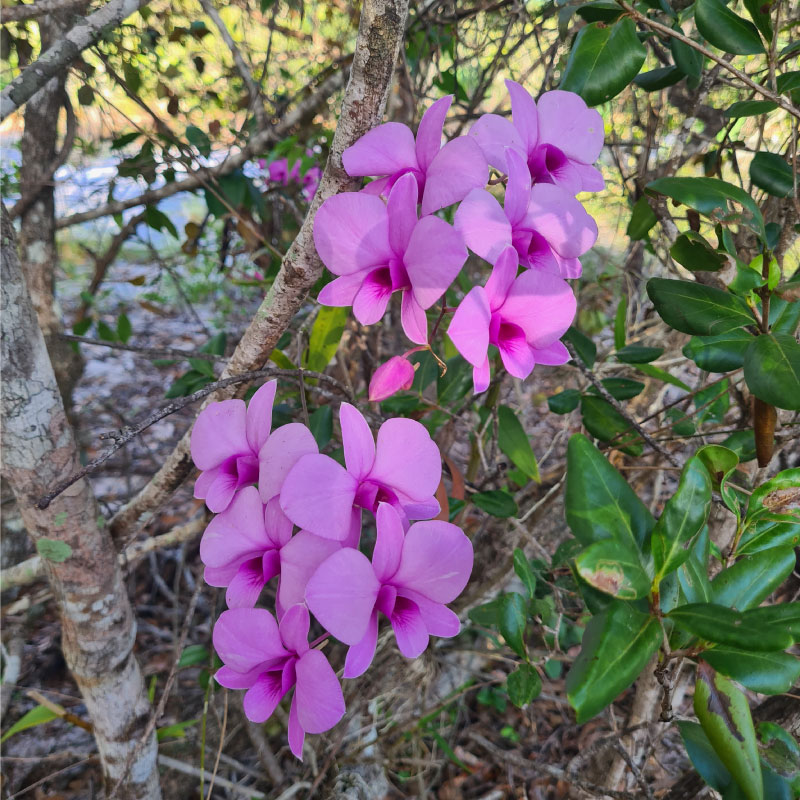


 — Department of the Environment, Tourism, Science and Innovation