

|
|
Intertidal molluscs including shellfish reefs, shellfish veneers and isolated shellfish individualsShort descriptionMollusc communities, including:
Disclaimer: Ecosystem type descriptions are based on biophysical attributes identified in Central Queensland through expert advice and supported by scientific literature. Not all ecosystem types are mapped based on current inventory, and many of the ecosystems described here may also occur in other parts of Queensland.
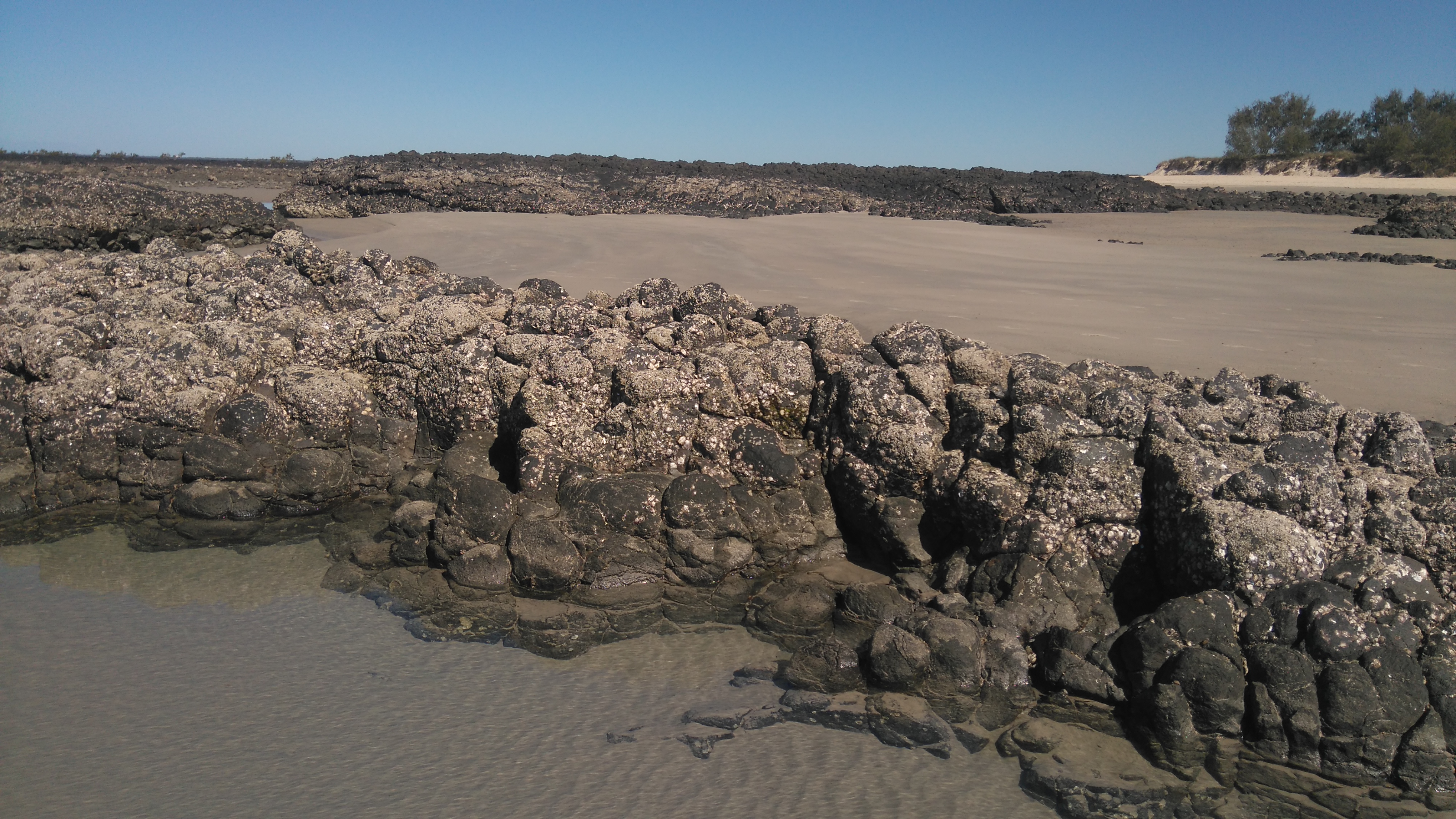
Classification categoriesSelect from the links below to view related ecosystem type categories Long descriptionDifferent types of mollusc ecosystemsShellfish ecosystems in southern Queensland may be reef forming, grow as veneers on terrigenous substrates, or occur as isolated individuals[5]. Shellfish (mollusc) reefs are defined as: being at least 5 m2 in size, dominated by at least 25% live shellfish cover, and are growing on a shell carbonate substrate at least 2 shellfish thick. That is, reefal shellfish must be growing on shell carbonate of at least two shellfish thick. In terms of their attributes, the substrate composition attribute is ‘Calcareous – shell’, with a cover qualifier of ‘25%’ of at least 2 shellfish thick. The presence of shell in or on top of substrate is necessary for a shellfish reef and is an indicator of shellfish communities[5]. Shellfish reefs can also occur as reef patches of less than 5m2 in size. Other, non-reefal shellfish ecosystems do not meet these criteria – either the substrate is not calcareous-shell (i.e. the shellfish are encrusting on a substrate whose composition is rock i.e. terrigenous), and they do not meet the shellfish reef definition. Non-reefal shellfish may grow as veneers when growing on consolidated substrates. Very low density shellfish can form isolated populations[5].. Shellfish ecosystems in southern Queensland include those with:
Fourteen species of bivalve mollusc are known to form shellfish reef ecosystems, with their extent in Queensland poorly known[2]. Other shellfish ecosystems grow on, or form, consolidated ecosystem types which are only reefal when composed of shellfish carbonate substrate. These ecosystems are typically dominated by the oysters (Ostraeidae) Saccostrea cucullata (milky oyster) and Saccostrea glomerata (rock oyster)[2], with or without barnacles, mostly from the family Chthamalidae and Balanida but also Lepadidae[1]. Where shellfish grow as veneers on consolidated substrates, they may co-occur with a range of other biota, including encrusting algae, erect macrophyte algae, bryozoans, chitons (Chitonidae), limpets (Patellidae, Patelloididae, Fissurellidae, Siphonariidae), periwinkles (Littorinidae), top shells (Trochidae), turban shells (Turbinidae), nerite shells (Neritidae) and other gastropods (e.g. Planaxidae, Thaiidae, Mytilidae), hydroids (Dynamena crisoides), zoanthids (Zoanthidea), sea stars (Asteroidea), anemones (Actinia tenebrosa, Cnidopus verater) and polychaeta worms (Onuphidae, Serpulidae)[1]. Other shellfish ecosystems grow on unconsolidated substrates. Isignomon ephippium (leaf oyster) can also be found on these consolidated substrates but is typically habitat forming on mud and sand[2]. See types (20, 64, 65, 118). Special valuesOysters and mussels are ecosystem engineers that create shellfish reefs that provide, modify and maintain habitats for a range of other species. Shellfish reefs provide a range of ecosystem services, including food provision, fish and invertebrate habitat, water filtration, fish production and shoreline protection[2]. For thousands of years, Traditional Owners caught and ate large numbers of shellfish species in and around the Queensland coast. Often they would cook the meat and use the shells for a number of purposes, or dispose of shells in large dump sites called shell middens. Shell middens have provided important information and clues about Traditional Owners and the environment they lived in. The middens tell the story of the Traditional Owners’ diet, food sources and species available and the impact of environmental changes on biodiversity and marine ecosystems[4]. Can form a habitat of modified Naturalness (e.g. rock walls and jetties). Artificial shellfish reefs are an emerging technology designed to treat and improve water quality. Diagnostic attributesInundation 'Intertidal – Lower low', 'Intertidal – Mid low', 'Intertidal – Upper low', 'Intertidal – Low undifferentiated', 'Intertidal – Lower medium', 'Intertidal – Upper-medium', 'Intertidal – Medium undifferentiated', 'Intertidal – High', 'Intertidal – Undifferentiated', 'Intertidal – High undifferentiated' Structural macrobiota 'Mollusc – other', 'Mollusc – oyster', 'Mollusc - rock oyster', 'Mollusc - leaf oyster', 'Mollusc - pearl oyster', 'Mollusc - Mussels' 'Mollusc – scallop', 'Mollusc – barnacles', 'Mollusc - invasive shellfish', 'Mollusc - Mixed or other undifferentiated (e.g. bivalve, gastropod (limpet, worm shell))' Consolidation 'Consolidated'(Veneers), 'Unconsolidated' Substrate composition ‘Calcareous – shell’ (shellfish reef) ‘Terrigenous’ (shellfish veneer or isolated population) Relative relief ‘High’ ‘Very high’ ‘Low’ ‘Medium’ (shellfish reef) (if ‘Very low’ = shellfish veneer) QualifiersModified ecosystems (e.g. oyster leases) are unmapped. Oysters and barnacles may also occur on modified consolidated ecosystems (type 24). DistributionIn northern Queensland, the oyster Crassostrea amasa was the most conspicuous fauna and covered most of the rocky substrate between high water neap and mean sea level (i.e. upper intertidal). Tropical species typically occur north of approximately 25 degree south with temperate species to the south of this boundary[1][3]. This boundary coincides with a change in wave energy from high wave energy K'gari (Fraser Island) southward to low wave energy within the Great Barrier Reef lagoon[3]. Subtropical Queensland is transitional between the tropics and temperate zones, having many rock oyster Saccostrea species as well as hairy mussels, pearl oysters and leaf oysters. The Sydney rock oyster Saccostrea glomerata, is an intertidal specialist in southern Queensland, growing on a range of consolidated and unconsolidated substrates(REFERENCE). Historically rock oysters had a far wider distribution in southern Queensland as they have been heavily harvested over the last 150 years. Artificial shellfish reef construction is underway across parts of Queensland including Moreton Bay and the Noosa River to provide artificial habitat and treatment systems to uptake nutrients and other potential contaminants. The following relates to distribution of this ecosystem type within the Central Queensland mapping area:
CommentsTypically intertidal oyster ecosystems occur on low energy consolidated substrates[1] although this is not a diagnostic attribute. Changes in Energy source and magnitude can also modify which species will be present. Additional InformationMapping shellfish reefs in southeast Queensland for protection, management and restoration Shellfish Reef Restoration Network References
Last updated: 16 July 2026 This page should be cited as: Department of the Environment, Tourism, Science and Innovation, Queensland (2026) Intertidal molluscs including shellfish reefs, shellfish veneers and isolated shellfish individuals, WetlandInfo website, accessed 17 September 2026. https://wetlandinfo.detsi.qld.gov.au/wetlands/ecology/aquatic-ecosystems-natural/estuarine-marine/descriptions/116/ |


Site footer


 — Department of the Environment, Tourism, Science and Innovation