

|
|
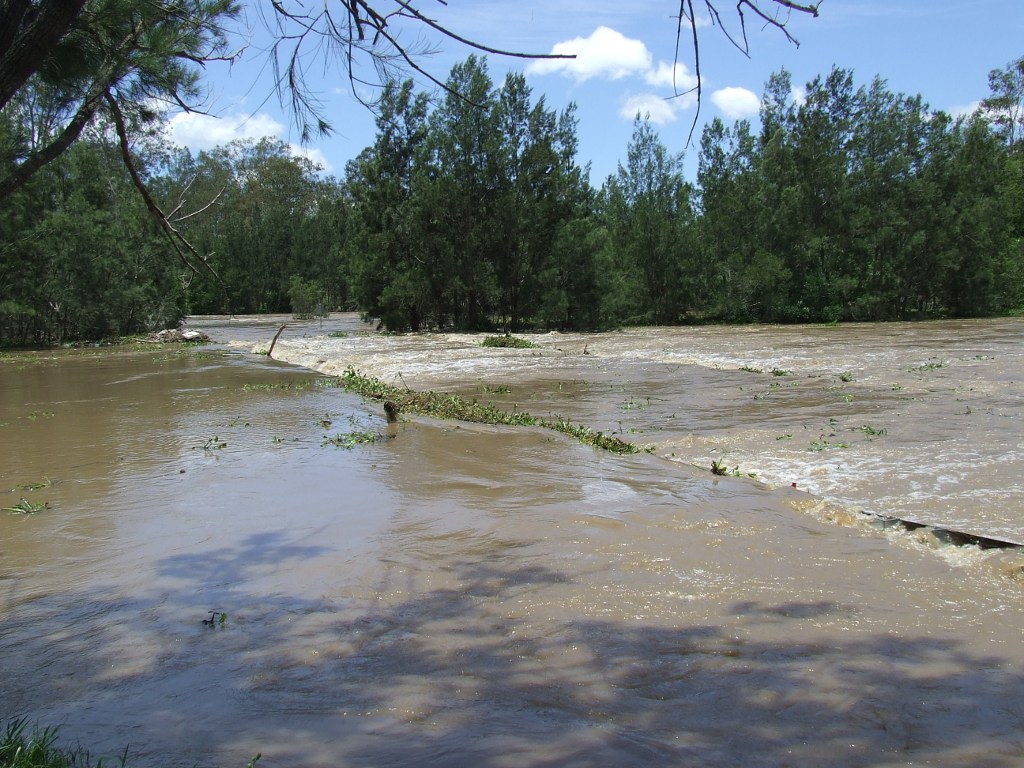
Assessing the impacts of future climate variability and wetlandsQueensland is already known for its variable climate. As the climate changes into the future, affects to the environment will be increasingly felt. Environmental impacts from both anthropogenic and natural climate change will likely include more frequent and intense rainfall events leading to flash and record flooding, extended periods of high heat, more intense drought, rising sea level and higher storm tides. There may also be an increase in cyclone intensity and the cyclone risk zone may extend further south. As an independent body, the Australian Climate Commission has stated that the decisions made by the global community on climate policy will be crucial in terms of how much and how fast the global temperatures will rise and therefore what the severity of the impacts will be. Quick facts
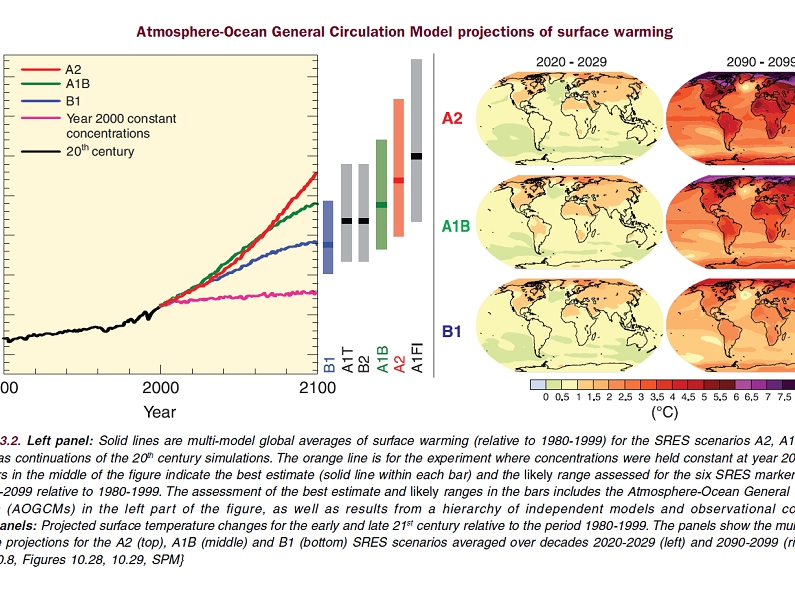
Scenario planningScenarios are a helpful way to explore the range of possible future scenarios Australian wetlands could face. The Intergovernmental Panel on Climate Change (IPCC) has produced a set of scenarios (p 12) that show the range of potential warming outcomes, depending on how quickly global emissions are reduced and the level at which atmospheric carbon dioxide (CO₂) ultimately stabilises. It is important to consider the full range of scenarios when seeking to determine how wetlands will be impacted. More information:
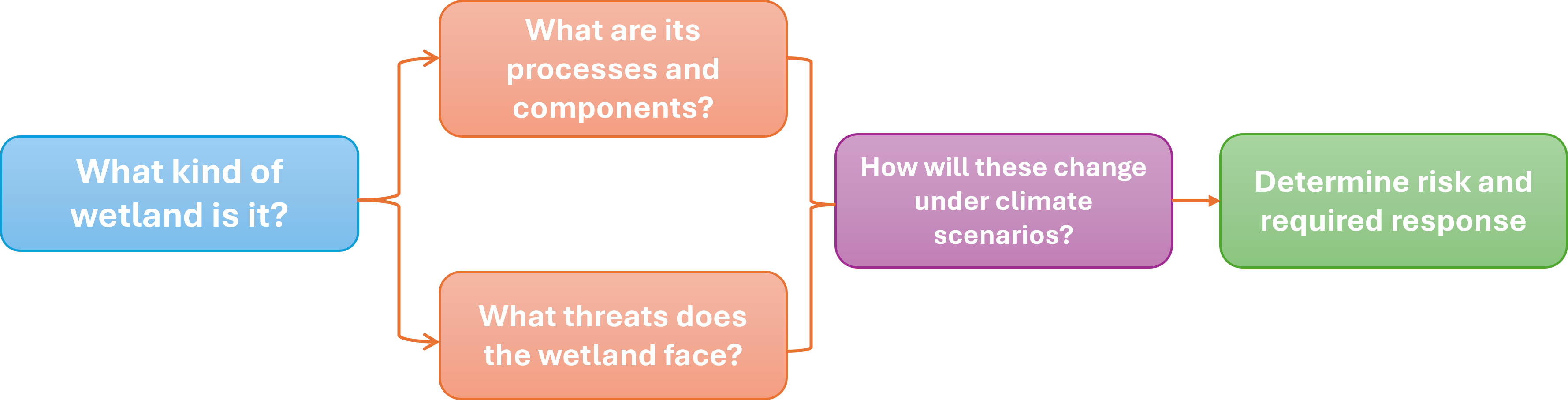
A step-by-step guide to understanding how climate change will impact a wetlandIn coming decades, the institutions that manage Queensland’s wetlands will need to learn to manage these wetlands in a changing climate. While it is clear that climate change will generally be harmful to wetlands globally, many of these negative impacts will manifest as changes to the existing pressures on wetlands. For example, water shortages may be exacerbated by increased drought, or pest species pressure may be increased as the climate broadens the distribution of some common pests. The pressures wetlands face vary widely, and so too will the impacts that are experienced as the climate changes. Understanding the impact that climate change will have on a specific wetland system requires careful, case-by-case consideration of the wetland, its processes and the pressures it faces. Furthermore, understanding how climate change modifies the processes and pressures in a wetland provides a foundation for informed, proactive management actions. The process below can be used to derive or enhance this understanding.
Step 1: What kind of wetland is it?Queensland has a huge variety of wetlands, and each type functions differently. The Queensland wetlands mapping can be used to identify wetlands in Queensland. Conceptual models for many of Queensland’s wetland types offer a useful visual explanation of how various kinds of wetlands function. Step 2: What components and processes occur in the wetland and the catchment?Using the conceptual models of wetlands, knowledge of its catchment and the components of the wetland and landscape processes, it is possible to establish the key processes that enable the wetland to exist and function in a healthy way. For example, it may be that the wetland is dependent on tidal inundation, or perhaps it is fed by groundwater from an aquifer that recharges hundreds of kilometres away from the wetland itself. The connections between wetlands and their broader landscape which is referred to as ‘connectivity’ are very important, and the Queensland Wetlands Program has developed a connectivity framework for assessing aquatic ecosystem connectivity. It is also important to consider how nutrients and biota function in the wetland itself. These are the fundamental systems of the wetland, just as breathing and blood flow are essential for a human being to stay alive. It is these processes that will need to be sustained, as the climate changes, if the wetland is to remain healthy. Step 3: What threats does the wetland already face?Wetlands in Queensland face a variety of existing threats and pressures and these pressures will be exacerbated as climate changes. Each wetland and wetland system will be affected by different pressures and only some will be of concern. Step 4: How will wetlands change?Having established a clear sense of the vital processes in and around the wetland, as well as the existing threats it faces, it is possible to get a sense of how these will change over time under various climate scenarios. The Queensland Government offers regionally-specific projections of likely climate impacts in Queensland for a number of IPCC warming scenarios. It is important to note that existing threats may change, as will existing processes, and that new threats may also emerge as weather patterns and species distribution shift. Human systems will also be impacted by climate change, and the adaptive strategies used to cope with a drier climate (e.g. more dams, levees, desalination and water re-use) may present new pressures on wetlands. Once the changes that the wetland is likely to face have been established, key risks can be determined and plans to minimise impact can be made. A Coastal Hazard Adaptation Strategy (CHAS) provides a structured framework for identifying risks, assessing vulnerable areas, and implementing long-term solutions to reduce the impact of current and future coastal hazard risks. Completing a CHAS has enabled local governments to improve their understanding of the vulnerabilities and risks to communities, infrastructure, and the environment. The Commonwealth Government has produced a range of detailed documents describing the management of climate change risks and assessing coastal risks under climate change. Managing climate change risks on wetlands is a topic of focus for many nations. Examples of Australian and international reports and programs include:
Frameworks for adaptationThe Biodiversity and Ecosystems Climate Adaptation Plan, a Sector Adaptation Plan, was developed under the Queensland Climate Adaptation Strategy (Q-CAS) 2017-2030, led by the National Climate Change Adaptation Research Facility (NCCARF). The report sets out principles for responding to the biodiversity crisis being accelerated by climate change. The Australian Government's National Adaptation Plan was also released in September 2025 and sets a framework for adaptation to nationally significant climate risks. Additional linksReferences
Last updated: 10 July 2026 This page should be cited as: Department of the Environment, Tourism, Science and Innovation, Queensland (2026) Assessing the impacts of future climate variability and wetlands, WetlandInfo website, accessed 17 September 2026. https://wetlandinfo.detsi.qld.gov.au/wetlands/management/climate-change/climate-variability.html |


Site footer


 — Department of the Environment, Tourism, Science and Innovation